Kisii University has come under scrutiny following a qualified audit opinion issued on its financial statements for the year ended June 30, 2025, posing concerns over compliance, internal controls, outstanding receivables, staffing irregularities, and governance practices.
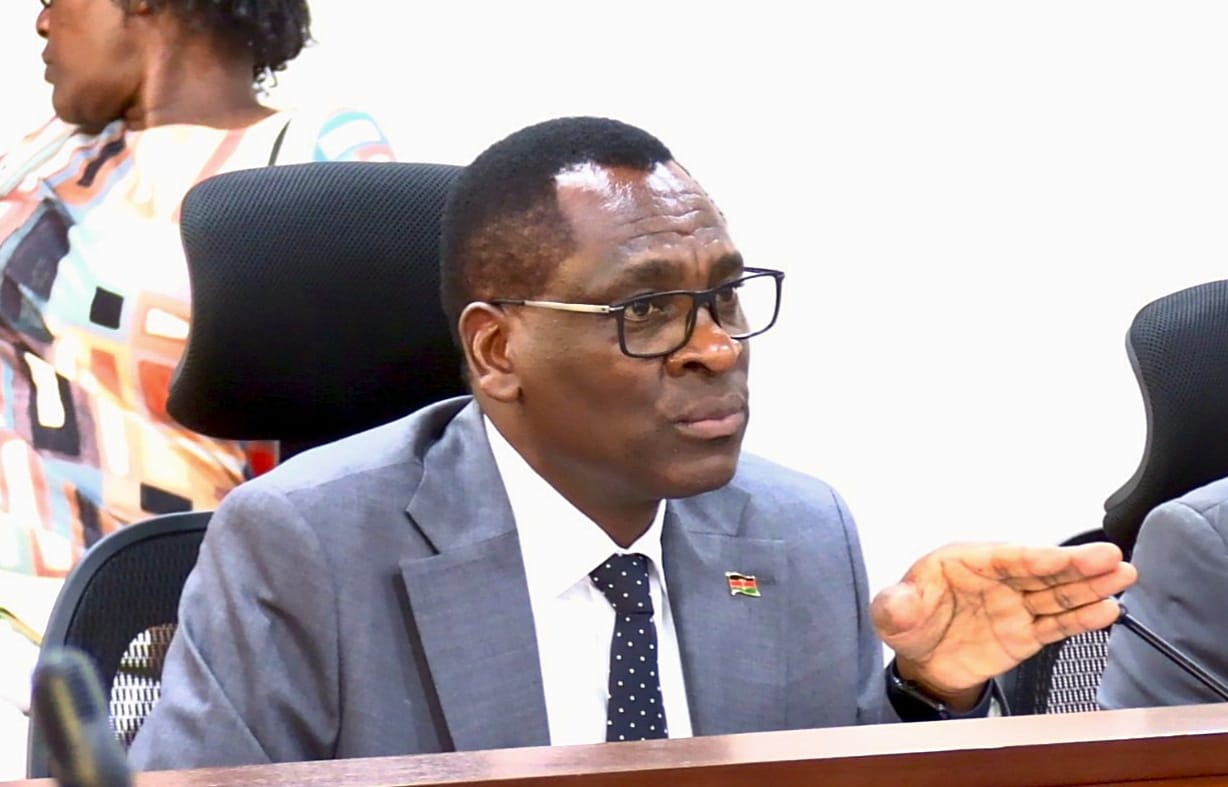
When the University’s Vice Chancellor, Nathan Ogechi, appeared before the Public Investments Committee on Governance and Education, lawmakers were told that the Auditor-General’s report confirmed that the institution failed to fully comply with prescribed public sector accounting reporting frameworks.
The VC, Ogechi, before the MPs, admitted the shortcomings in the presentation of financial statements.
“We concur with the observation raised with regard to the presentation format. All the issues raised have been noted for implementation, especially with regard to the presentation of cash flow and statement of changes in net assets. The management commits to continuously follow the guidelines and templates as revised from time to time by the necessary regulatory bodies,” Ogechi said.
The OAG report flagged unsupported and long-outstanding receivables amounting to Sh1,824,839,000, which is largely tied to student fees, where the management attributed the situation to delays in government funding.
"The university was owed an amount of Sh1,907,341,000 by the student debtors. This amount is a result of delayed disbursements of student scholarship and HELB funds under the new funding model,” the OAG reported.
Ogechi notified the MPs of the operational challenges caused by policy directives.
"The management is facing challenges when it comes to collecting fees from students due to various government pronouncements, which tend to allow students to attend classes and even do exams without paying the household fees. Despite partial disbursements of Sh992,910,976.50, an outstanding balance of over Sh914 million remains unpaid.’"
The OAG reported that the Construction Projects and Procurement Gaps questioned the handling of Work-in-Progress (WIP) projects worth Sh2.88 billion, including three building blocks already in use without formal handover documentation at the time of audit.
In response, Ogechi apprised the Jack Wamboka-led committee that, "The 3 building blocks are part of the ICT Centre, which are substantially complete with only external works remaining during the time of audit. The works are ongoing and will be completed within the Current Financial Year."
The report also highlighted an under-expenditure of Sh69.7 million, equivalent to 32 percent of the capital expenditure budget.
The VC acknowledged the variance, saying, "With regard to this planned capital expenditure, the university was supposed to raise the funds internally for the same. However, the university was not able to realize the funds as budgeted. Attributed to the outstanding receivables from both the scholarship and HELB funding."
The audit further revealed that 10 staff members served in acting capacities beyond six months, contrary to public service human resource policies. In response, the VC said that, "The university advertised for the senior positions in the month of February 2023 and redeployed the other affected officers, but the process stalled due to court litigation from the trade Unions."
On staff diversity, the OAG reported that 65 percent of the 619 employees were drawn from one dominant ethnic communitywhich stands in breach of national cohesion laws.
The university chief defended the fact, saying it was difficult to attract non-locals willing to take up the low-earning positions.
"From experience, it is difficult to attract people from outside the region who would be willing to come and work for the said jobs because of the low earnings. There is also pressure from the local community to be considered for such openings," he said.
Shockingly, the audit revealed that the pension deductions have been outstanding since 2019, flagging the failure to remit staff statutory deductions amounting to Sh572,805,000.
Management cited financial constraints, noting progress had begun.
“The main reason for nonpayment of these statutory deductions is due to a lack of funds. The university has entered into several repayment plans with statutory bodies with regard to settlement of the outstanding dues.”































Comments
Sign in with Google to comment, reply, and like comments.
Continue with Google